


Most drivers assume that Oregon law guarantees certain insurance protections after a crash, and for the most part, that's true. Personal Injury Protection (PIP) is built into nearly every auto policy in the state and is designed to pay medical bills and lost wages, regardless of fault. But PIP claims rarely play out as simply as the law makes them sound. Coverage doesn't extend to every rider on the road, insurance companies don't always pay medical bills without a fight, proving wage loss can be more complicated than it looks, and the benefits you receive may come with strings attached. Our own Attorney Todd Taylor of Johnson & Taylor has handled these claims for years, so he recently shared his honest take on how PIP really works in Oregon, insurance gaps and all.
Todd's Take: An Insurance Coverage Gap That Doesn't Add Up
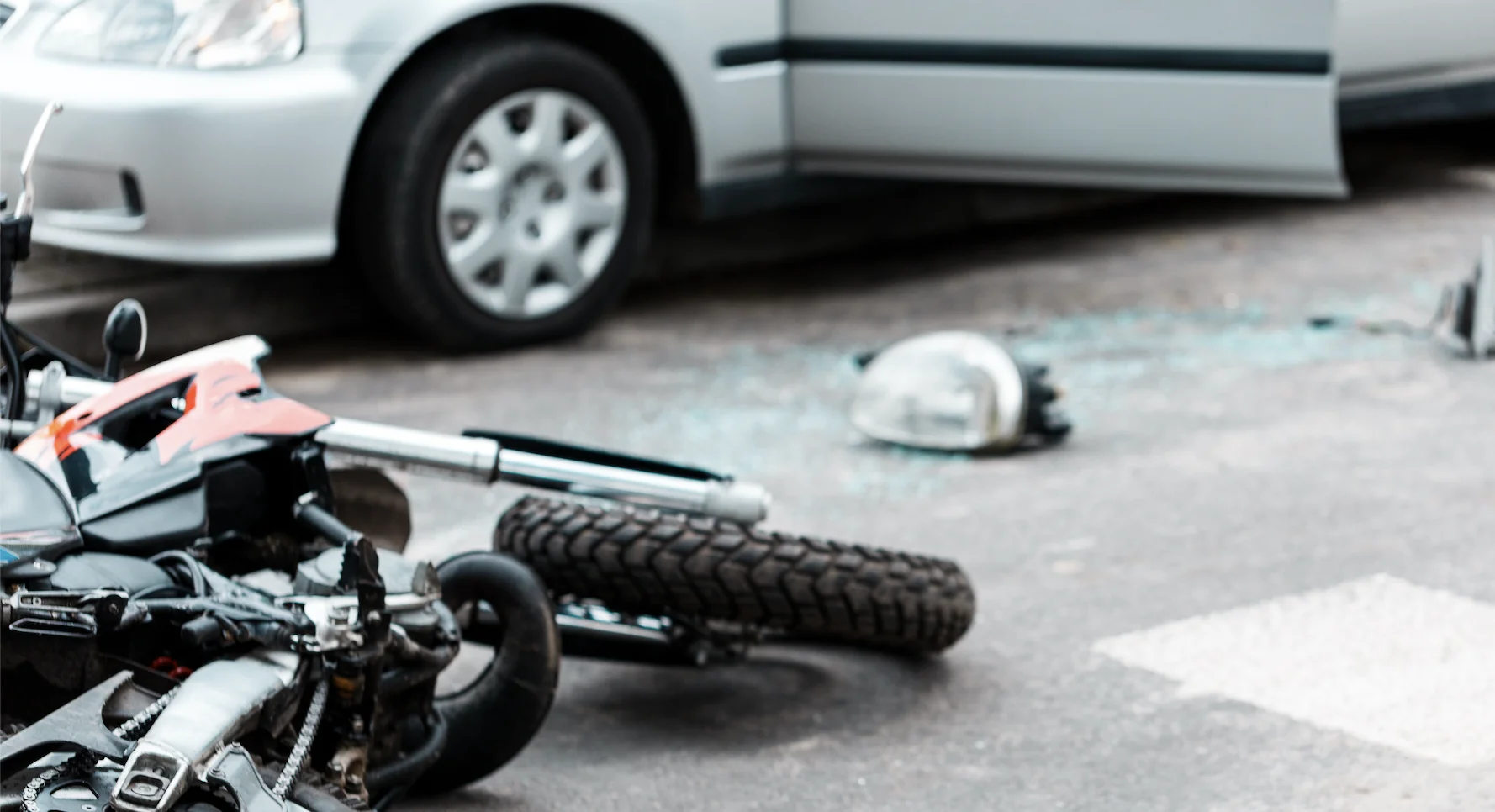
I've spent more than two decades handling personal injury and wrongful death cases in and around Salem, and this gap in the law still doesn't sit right with me. In my experience, motorcycle riders, moped riders, and bus passengers are often the ones who need PIP protection the most, yet they're the ones left without it.
Here's what I mean. At a minimum, Oregon's PIP mandate covers $15,000 in medical expenses incurred within two years of the crash, 70% of lost wages (up to $3,000 a month for up to 52 weeks, once you've missed at least 14 consecutive days of work), and up to $5,000 in funeral expenses. It can also apply to passengers in the car, pedestrians and cyclists struck by the vehicle, and household family members hurt elsewhere as pedestrians or passengers.
That's meaningful protection, and it usually shows up fast, without a fight over fault. But buses, motorcycles, and mopeds are carved out of the mandate. If you're riding a motorcycle and get hit by a car, you may have no PIP benefits waiting for you at all unless you specifically purchased optional coverage for your bike.
It may seem perplexing why the law works this way. If anything, the logic should run the other direction. A rider on a motorcycle or moped has far less protection around them than someone in a car, so injuries from those crashes tend to be more severe, not less. Bus passengers, meanwhile, have no control over the vehicle at all, yet they don't automatically get the same no-fault safety net that a driver of a private passenger car does. The people most exposed to serious harm are the ones the law protects least.
I bring this up because I've sat across from injured people who assumed PIP would be there for them and found out the hard way that it wasn't. That gap doesn't mean you're out of options after a motorcycle, moped, or bus-related crash. It just means the path to compensation looks different, and it usually depends more heavily on pursuing the at-fault driver's liability coverage, your own underinsured motorist coverage, or other avenues that a standard PIP claim would normally cover for a car accident.
If you ride a motorcycle or moped, it's worth asking your insurance agent whether you can add optional medical payments coverage to your policy before you ever need it. It's a relatively small step that can make a difference if the unexpected happens. For everyone else, it's a good reminder that Oregon's insurance requirements have gaps, and knowing where those gaps sit before an accident happens can save you a lot of stress after one.
Medical Bills and "Independent" Exams
PIP is supposed to pay for "reasonable and necessary" medical bills after a crash, and in a lot of cases, it does that without much friction. But insurance companies don't always take medical bills at face value. When they want to dispute the necessity of your treatment, they'll often request what's called an independent medical exam (IME) performed by a doctor of their choosing.
In my experience, though, these exams rarely are independent. The insurance company selects and pays the doctor, and it's reasonable to assume they won't keep hiring a doctor who doesn't produce the results they want. I've seen IMEs come back with unfavorable findings even when the medical evidence supporting a client's treatment was about as clear as it gets.
Deciding whether to attend an IME isn't something I think anyone should navigate alone, either. If the exam comes back unfavorable, the insurance company may stop paying your medical bills, and that report can end up working against you later in the case. But refusing to attend can lead to an automatic denial of your bills, with no way to dispute it. I think this decision deserves a real conversation with an attorney before you commit to a path either way.
When we can, our firm focuses on getting the insurance company to cancel the IME request altogether, which often leads to a more straightforward agreement on medical bills and wage loss without the delay and expense of arbitration.
One thing I always tell clients: if you need medical help then consistent medical care matters, even when it feels repetitive or inconvenient. Long gaps between appointments give an adjuster a reason to question whether you're really hurt or whether treatment is still needed. And if you feel like your treatment isn't helping, that's worth a direct conversation with your doctor about other options, rather than letting appointments trail off. I've seen too many people continue treatment without real improvement, only to have the insurance company use that stagnation as an excuse to request an IME.
Proving Wage Loss Isn't Always Simple
PIP also covers a portion of lost wages, but only if you can meet two requirements. First, you need to have been employed at the time of the accident, with proof of your income and proof that you missed at least 14 consecutive days of work. Second, your doctor has to authorize the time off in writing.
The proof-of-income piece is usually straightforward for someone with a regular paycheck. A few months of pay stubs, along with written confirmation from your employer of your normal hours and wages, is often enough. It gets harder for people who are self-employed, since they may not have the kind of income records an adjuster is looking for. I've also seen self-employed clients keep answering calls or handling small parts of their business while they recover, which can unintentionally undercut the 14-day requirement. Even so, our firm has helped clients recover wage loss benefits with far less documentation than most adjusters would expect to see.
The second requirement, a disability note from your doctor, matters just as much. PIP adjusters will rarely pay wage loss without one, and it needs a specific time frame attached to it. Once that time frame passes, you need a new note to keep the benefits going. Our firm makes a point of getting these notes to the adjuster right away, since any delay in that process is a delay in your paycheck.
It's also worth knowing that insurance companies can request an IME for wage loss claims, too, using the same playbook they use for medical bills. The same advice applies here: think carefully, with an attorney, before deciding how to respond. In some cases, negotiating directly with the adjuster is a better path than putting a client through another exam or a drawn-out arbitration process.
PIP Reimbursement Can Reduce Your Payout
There's one more piece of PIP that catches a lot of people off guard: reimbursement. When your own insurance company pays out PIP benefits, they typically have the right to be reimbursed later from the at-fault driver's insurance company. If that right isn't addressed carefully, it can shrink the amount of money left over for your pain and suffering, or for medical bills and wage loss that PIP didn't fully cover.
Some situations don't require any reimbursement at all, and others are murkier and depend heavily on the specific facts of the claim. This is an area where our firm has had real success, negotiating directly with PIP carriers to waive their reimbursement rights entirely or reduce what they're owed substantially. Every dollar we can keep out of a reimbursement claim is a dollar that stays in your pocket instead.
How Johnson & Taylor Can Help with PIP-Related Claims
When a crash falls into one of these PIP gaps, having the right guidance matters more than ever. Our firm has spent years untangling these kinds of situations for clients across Oregon, whether that means identifying every available source of coverage, negotiating with insurance adjusters who are quick to point to what a policy doesn't cover (sometimes incorrectly), or taking a case to arbitration when a fair resolution isn't on the table. We believe every client deserves a clear answer about where they stand and a team that will fight for the coverage they're actually entitled to.
Whether you're dealing with a coverage gap after a motorcycle or moped accident, a disputed IME, a wage loss claim that isn't moving fast enough, or questions about what a PIP carrier is entitled to be reimbursed, you don't have to sort it out alone. Reach out to Johnson & Taylor at (971) 318-5516 for a free consultation, and let's look at your situation together.